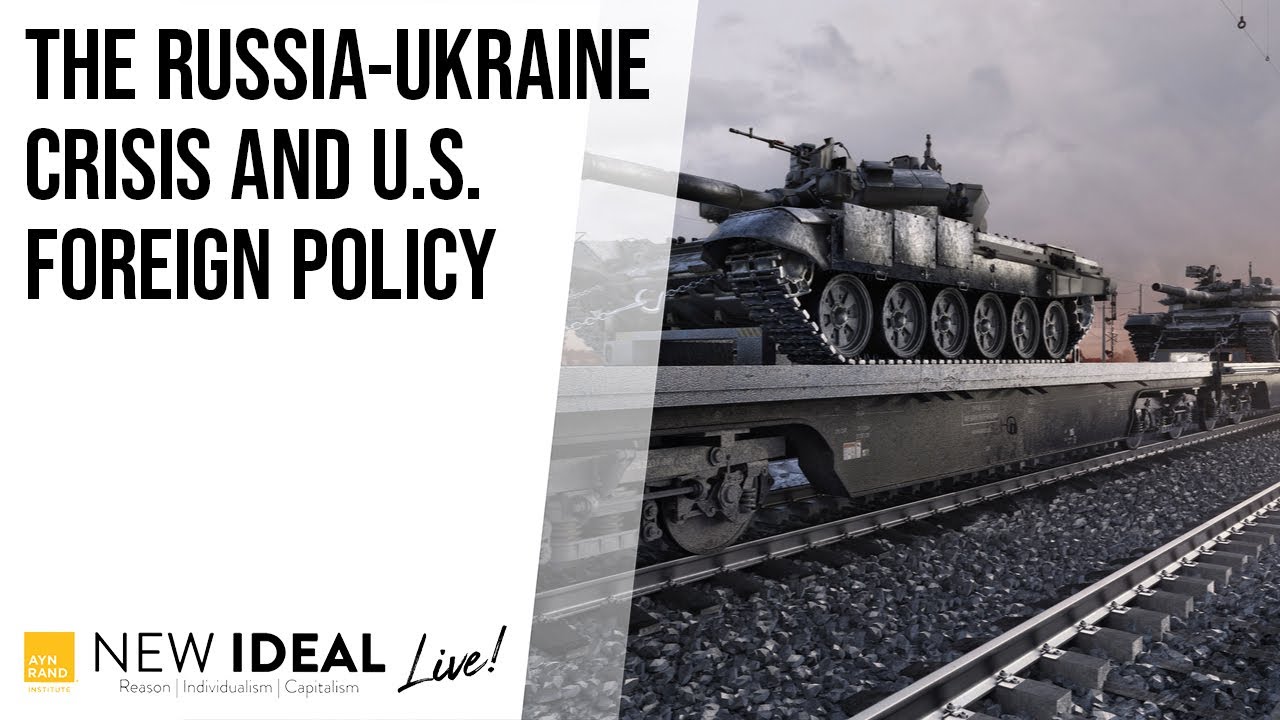
The Russia-Ukraine Crisis and U.S. Foreign Policy
Ayn Rand Institute
Russia appears poised to invade Ukraine at any moment, the White House warned on Feb. 11. With the threat of a major war looming in Europe, what is America’s stake in this crisis? How should we evaluate American foreign policy toward Russia? Join Elan Journo and Agustina Vergara Cid as they analyze the meaning of this crisis and the philosophic ideas shaping it.
Among the topics covered:
● An overview of the current state of the crisis;
● How to conceptualize America’s interests in foreign policy;
● Russian president Vladimir Putin’s demands;
● The nature of Putin’s regime and his attempts to expand Russian power;
● Applying the Objectivist moral framework to the Russia-Ukraine crisis;
● What actions the U.S. should take in response to Russia’s actions;
● How and why Putin lends support to other hostile dictatorships around the world;
● The history of America’s amoral approach to Putin’s Russia;
● The amoralism of the dominant views on U.S. policy in the Russia-Ukraine crisis;
● How European countries should respond to the crisis;
● Whether NATO is a valuable organization today.
Mentioned in the discussion are Leonard Peikoff’s lecture “Some Notes About Tomorrow,” Peter Schwartz’s book A Foreign Policy of Self-Interest: A Moral Ideal for America, Onkar Ghate and Elan Journo’s book Failing to Confront Islamic Totalitarianism (2nd edition), and Journo’s book What Justice Demands.
00:00 Introduction
00:37 Crisis overview
03:22 Conceptualizing U.S. foreign policy
09:44 Putin's demands
14:25 Putin's expansionism
21:14 Applying Objectivist morality
27:25 Proper U.S. response
29:52 Hostile dictatorships worldwide
36:34 America's amoral approach
44:42 Amoralist assessments of U.S. policy
50:13 Europe's proper response
53:55 Is NATO valuable?

Onkar Ghate is the chief philosophy officer and a senior fellow at the Ayn Rand Institute.