Loading search results
Search
 CourseLeonard Peikoff at the Ford Hall ForumLeonard Peikoff14 lessons20h 29 min
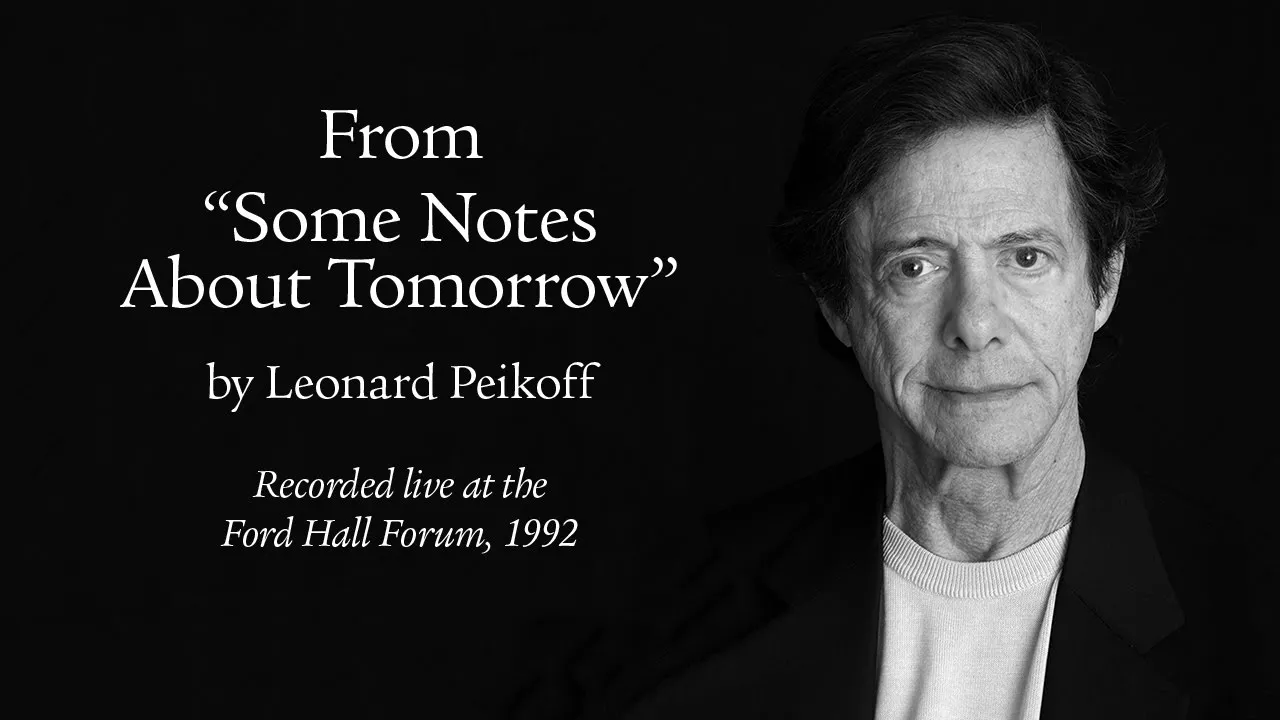
In 1961, Ayn Rand received a speaking invitation from the Ford Hall Forum, a group that sponsors free public lectures on social and political issues. She spoke there almost every year until her death. From 1982 to 2003 philosopher Leonard Peikoff continued that tradition. Over this period, Peikoff gave several talks in which he applied Ayn Rand's philosophy of Objectivism on a wide range of topics such as education, medicine, the religious right, the fall of communism, art, crime and America's response to 9/11. Explore Leonard Peikoff's twenty years at the Ford Hall Forum. Disclaimer: Although Dr. Peikoff granted permission for the creation of this course in a new format, he has not reviewed or approved any of its content.
 CourseReflections on Life and Personal ValuesLeonard Peikoff5 lessons5h 54 min
In this collection of talks spanning more than a decade, Leonard Peikoff reflects on a wide range of topics of significant importance to his life, both personally and professionally. Several of these discussions are informal: Peikoff answers written or verbal questions from audience members or reflects on personal anecdotes. Throughout the various talks, the listener will get a keen sense of Peikoff's own personal values, especially in relation to his artistic interests, his professional life and his history with Ayn Rand. Disclaimer: Although Dr. Peikoff granted permission for the creation of this course in a new format, he has not reviewed or approved any of its content.
 CourseLectures on Culture and PoliticsLeonard Peikoff5 lessons6h 10 min
In this collection of talks and lectures, Leonard Peikoff addresses key cultural, philosophic, and political phenomena from the perspective of Objectivism. Topics include: the philosophic foundations of capitalism and the rise of statism in America, the role of philosophy and psychology in history, the essential subject matter of pre-college education, and other isues. A major theme running through these talks is that philosophy is the fundamental factor shaping men's choices and actions and the course of civilization. | In this collection of talks and lectures, Leonard Peikoff addresses key cultural, philosophical, and political phenomena from the perspective of Objectivism. Topics include: the philosophic foundations of capitalism and the rise of statism in America, the role of philosophy and psychology in history, the essential subject matter of pre-college education, and more. A major theme running through these talks is that philosophy is the fundamental factor shaping men's choices and actions and the course of civilization. Disclaimer: Although Dr. Peikoff granted permission for the creation of this course in a new format, he has not reviewed or approved any of its content.
 CourseThe Value of Great (Though Philosophically False) ArtLeonard Peikoff3 lessons4h 44 min
In these lectures, Leonard Peikoff argues that a great work of art has life-serving values to offer even when its philosophic content is untrue. Through analysis of some great works of literature, and a number of his favorite poems, Peikoff shows that great art, even when the work's theme is false, teaches you how to use your consciousness and how it can nourish your life. Disclaimer: Although Dr. Peikoff granted permission for the creation of this course in a new format, he has not reviewed or approved any of its content. These lectures were recorded in 1997 and in 1999.
 CourseThe DIM Hypothesis IILeonard Peikoff6 lessons9h 2 min
In this six-lecture course recorded in July of 2010 at the Objectivist summer conference in Las Vegas, Nevada, Leonard Peikoff discusses the final parts of his then book-in-progress The DIM Hypothesis , published in 2012. Here is a description of the book from the back cover of the softcover edition: "In this far-reaching study, Peikoff identifies the three methods of integrating data, as when connecting diverse experiments by a scientific theory, or separate laws into a Constitution, or single events into a story. The first method, in which data is integrated through rational means, he calls Integration. The second, which employs nonrational means, he calls Misintegration. The third is Disintegration—which is nihilism, the desire to tear things apart. "In The DIM Hypothesis , Peikoff demonstrates the power of these three methods in shaping the West, by using the categories to examine the culturally representative fields of literature, physics, education, and politics. Extrapolating from the historical pattern he identifies, Peikoff concludes by explaining why the lights of the West are going out—and predicts the most likely future for the United States." Note: Since the lectures that compose this course predate the book's completion, the book supersedes the course. If and when there are disagreements between the two, listeners should assume that the published book represents Peikoff's viewpoint. (A handout for this course, prepared by Peikoff, can be found here .) Disclaimer: Although Dr. Peikoff granted permission for the creation of this course in a new format, he has not reviewed or approved any of its content.
 CourseThe DIM Hypothesis ILeonard Peikoff6 lessons9h 35 min
In this six-lecture course recorded in July of 2007 at the Objectivist summer conference in Telluride, Colorado, Leonard Peikoff discusses the first parts of his then book-in-progress The DIM Hypothesis , published in 2012. Here is a description of the book from the back cover of the softcover edition: "In this far-reaching study, Peikoff identifies the three methods of integrating data, as when connecting diverse experiments by a scientific theory, or separate laws into a Constitution, or single events into a story. The first method, in which data is integrated through rational means, he calls Integration. The second, which employs nonrational means, he calls Misintegration. The third is Disintegration—which is nihilism, the desire to tear things apart. "In The DIM Hypothesis , Peikoff demonstrates the power of these three methods in shaping the West, by using the categories to examine the culturally representative fields of literature, physics, education, and politics. Extrapolating from the historical pattern he identifies, Peikoff concludes by explaining why the lights of the West are going out—and predicts the most likely future for the United States." Note: Since the lectures that compose this course predate the book's completion, the book supersedes the course. If and when there are disagreements between the two, listeners should assume that the published book represents Peikoff's viewpoint. (A handout for this course, prepared by Peikoff, can be found here .) Disclaimer: Although Dr. Peikoff granted permission for the creation of this course in a new format, he has not reviewed or approved any of its content.
 ShortAyn Rand University App Now in Spanish: Special Launch EventKeith Lockitch49 min
 ShortAn OAC Moment: Reason as a ValueOnkar Ghate12 min
 ShortReligious Goals Shape JihadismElan Journo8 min
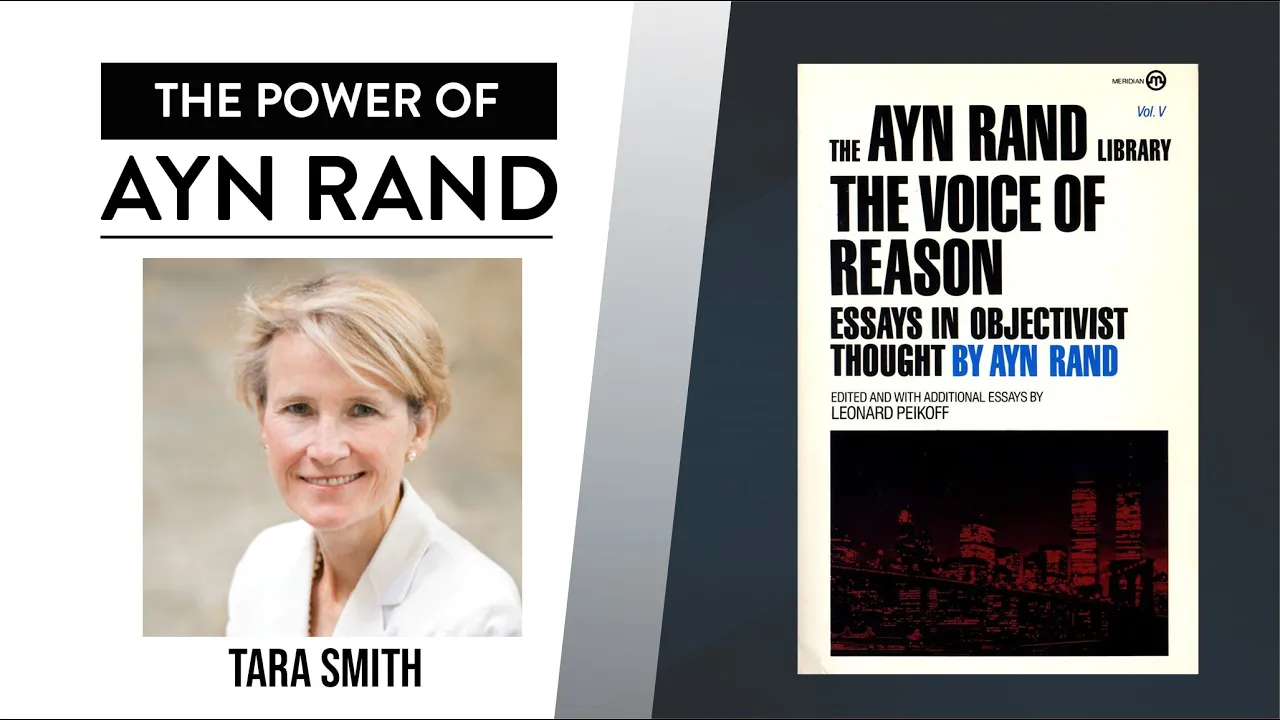 ShortThe Struggle Is Worth It | Tara Smith on The Power of Ayn RandTara Smith4 min
 ShortIntroduction to the Objectivist Ethics, with Tara Smith and Tristan de LiègeTara Smith3 min
 PodcastThe Real Meaning of 9/11Elan Journo2h 42 min
 PodcastUnderstanding "Woke" Ideology: Books by Yascha Mounk and Chris RufoBen Bayer1h 42 min
 PodcastUnborrowed Vision: The Virtue of Independence by Tara SmithTara Smith1h 25 min
 PodcastDavid S. Wilson’s “Sequel”: Atlas Hugged or Atlas Mugged?Elan Journo1h 24 min
 PodcastNavigating Schisms in the Objectivist MovementOnkar Ghate1h 23 min
 PodcastQ&A on the Best Objections to ObjectivismHarry Binswanger1h 15 min
- ArticleWhy Should One Act on Principle?Leonard PeikoffArticle1988
This lecture was delivered at Boston's Ford Hall Forum on April 24, 1988, then published in the February 27, 1989, issue of The Intellectual Activist and later anthologized in Why Businessmen Need Philosophy: The Capitalist's Guide to the Ideas Behind Ayn Rand's "Atlas Shrugged" (2011). There is no bromide more common today than the statement that we live in a "complex" world. Whatever the subject of discussion, this claim is routinely offered at the outset as a kind of magic incantation and all-purpose depressant. Its effect is not to inspire people to think, but to induce a sense of helplessness, weariness, hopelessness. It is used not to solve problems, but to assure people that there are no solutions. The past, our cultural spokesmen often suggest, was different; once upon a time we could find answers to our questions and know what to do, but no longer. Life is just too complicated now for — here is the dread word — "simple" answers. The word "simple" itself has become the basis of
- ArticleWhy Businessmen Need PhilosophyLeonard PeikoffArticle1995
This article was originally delivered as a talk to the Young Presidents' Organization on January 12, 1995, then anthologized in Why Businessmen Need Philosophy: The Capitalist's Guide to the Ideas Behind Ayn Rand's "Atlas Shrugged" (2011) . "Three seconds remain, the ball is on the one-yard line, here it is — the final play — a touchdown for Dallas! The Cowboys defeat the Jets 24–23!" The crowd roars, the cheering swells. Suddenly, silence. Everyone remembers that today is the start of a new policy: morality in sports. The policy was conceived at Harvard, championed by the New York Times, and enacted into law by a bipartisan majority in Washington. The announcer's voice booms out again: "Today's game is a big win for New York! Yes, you heard me. It's wrong for athletes to be obsessed with competition, money, personal gratification. No more dog-eat-dog on the field, no more materialism — no more selfishness! The new law of the game is self-sacrifice: place the other team above yoursel
 BookWhy Act on Principle?Leonard PeikoffBook
"Concrete problems cannot even be grasped, let alone judged or solved, without reference to abstract principles." —Ayn Rand Why Act on Principle? presents fourteen of Leonard Peikoff 's philosophic essays—his best articles and talks in his opinion. Most of them have never been anthologized, and many are hard to find. All are rich with fascinating observations and insightful applications of Objectivism. "Why should one act on principle? My answer is: in the end, men cannot avoid it—some principle always wins. If the right principles, the rational ones, are not conscious, explicit absolutes in men's minds, then their evil opposites take over by default and ultimately win out. That is why, in our pragmatist, unprincipled age, the wrong principles are winning. That is why every form of irrationality, cowardice, injustice and tyranny is sweeping the world. "It is not enough, therefore, merely to act 'on principle.' Man needs to act consciously on rational principles, principles based on the






Donor Exclusive